FoodProtect: New cutting tools that belong in your safety concept from 2026
September 2026
The new FoodProtect safety knives
Opening cardboard boxes, cutting open bags, slicing through plastic film, severing bands. In a single shift, this happens hundreds of times. For hardly any of these tasks is it specified in the workplace what cutting tool should be used.
This is where FoodProtect comes in: a coordinated cutting system for food production and processing that brings together solutions from the three brands Klever, PHC and Slice under one roof.
The gap between paper and the production floor
Your HACCP plan identifies the hazard of foreign bodies. The end-of-line metal detector is defined as a CCP, the test pieces are documented, and the audit according to IFS Food or BRCGS is underway.
Nowhere is it stated which knife is actually used during the shift. And if nothing is specified, someone eventually brings their own safety knife. A broken-off blade tip from a two-euro cutter is then a foreign body that no one planned for – and, depending on the material, one that the detector cannot see at all.
DGUV Information 212-864 already requires a documented tool selection via the risk assessment for hand knives in the food industry. FoodProtect provides the product range that allows this selection to be properly justified.
Three hazard types, one FoodProtect range
No single manufacturer covers everything. That's why we have a combination of three brands.
Product protection
Blades and handles are metal-detectable – not just the cutting edge. The designs are NSF-certified, separated into Food Zone and Non-Food Zone so that they can be clearly assigned in the hygiene zone plan. KLEEN® also features antimicrobial handle protection in accordance with ISO 22196. All points that can be recorded in writing as a preventative measure.
Employee protection
The blade is concealed, the finger cannot reach the cutting edge. That sounds trivial, but it is the difference between an opened cardboard box and a severed tendon. The BGN attributes around seven percent of the most severe industrial accidents in the meat industry to working with hand knives—accidents that result in permanent damage above-average often. Klever manufactures in the USA, so the supply chain is correspondingly short and traceable.
Standardisation
Instead of thirty variants from five sources, a defined product range across all locations and shifts. This simplifies purchasing, makes training repeatable and ensures that an audit in Plant 2 gets the same answer as in Plant 1.
Two products that haven't existed like this before
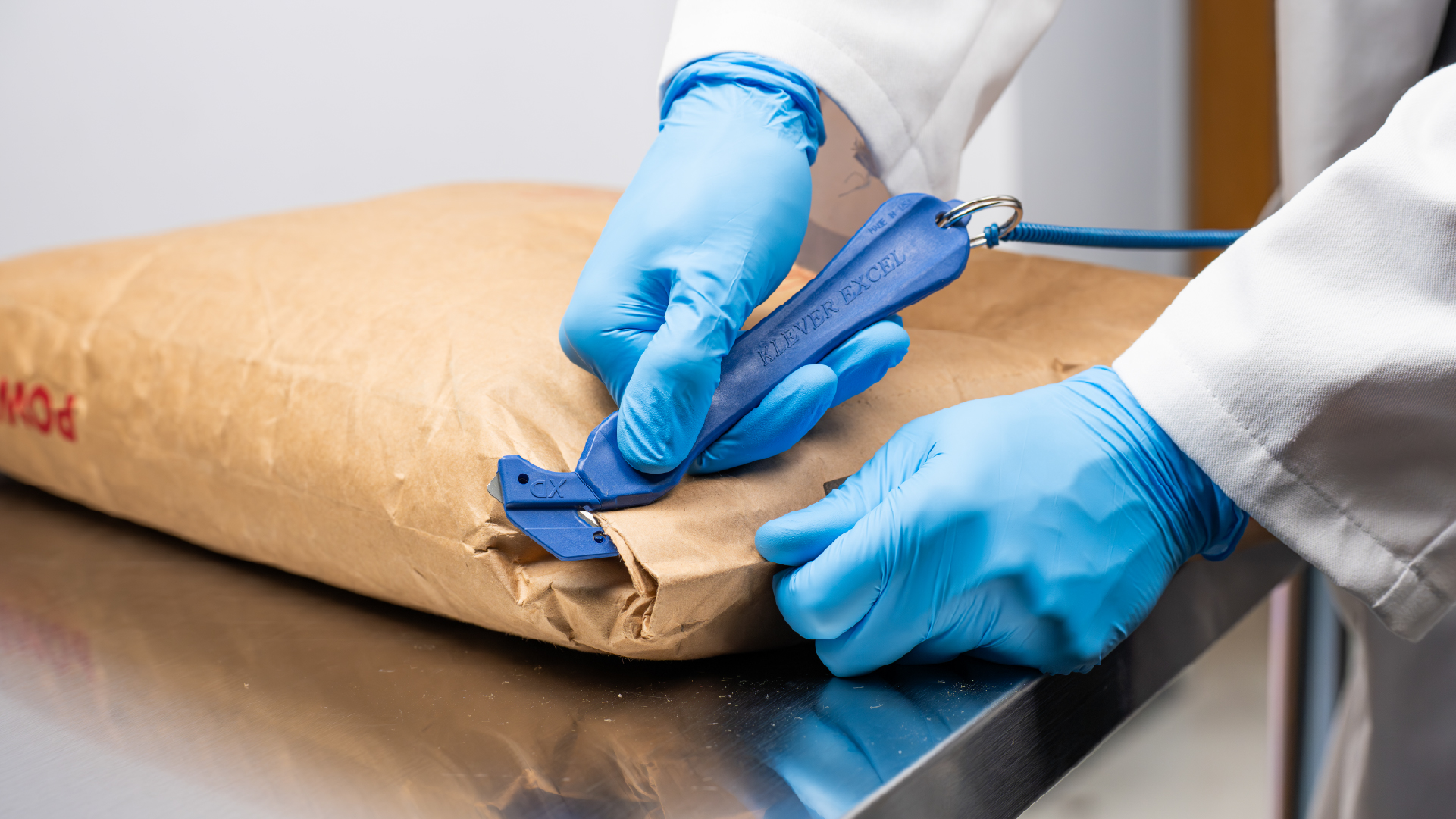
Klever ExcelXD® MD – the first concealed safety cutter to date that is metal-detectable and also features Smooth-Kut™. The technology prevents corrugated cardboard from jamming in the blade. Even double-walled cardboard goes through in a single motion, without having to reposition and without the jerky exertion of force that takes a toll on the wrist over time.
PHC Metal-detectable spiral cable – up to 1.20 metres of freedom of movement, yet the knife remains with the operative. No tools left lying on the conveyor belt, no searching at the end of the shift. And even if the cord itself should snap, this part is also detectable.
Both available immediately.
Availability of the FoodProtect range
The FoodProtect series is available worldwide via the Safety Products Global distribution network, including major safety equipment distributors.
Frequently asked questions
Do you have any questions about our range of safety knives?
We will be happy to help you. Simply send us an e-mail or give us a call:



 English
  German